
Pani puri
The exact origin of Pani puri is not fully documented, but it is widely believed to have started in the Magadha region of ancient India (present-day Bihar). Historical food references suggest that simple fried wheat or rice dough balls filled with water and spices existed in this region around 1000 BCE. Some also connect Pani puri with early Ayurvedic practices, where foods combining digestive spices, tamarind, and lentils were eaten for taste as well as health.
Mythological Connection
There is a popular story linked to the Mahabharata. It is said that when Draupadi was newly married to the five Pandavas, her mother-in-law Kunti gave her a small amount of food (dough and potatoes) and asked her to feed all five brothers. Draupadi created small fried balls, filled them with spiced mashed potatoes, and served them with flavoured water. This clever invention is often believed to be the mythical origin of Pani puri.
Evolution and Spread
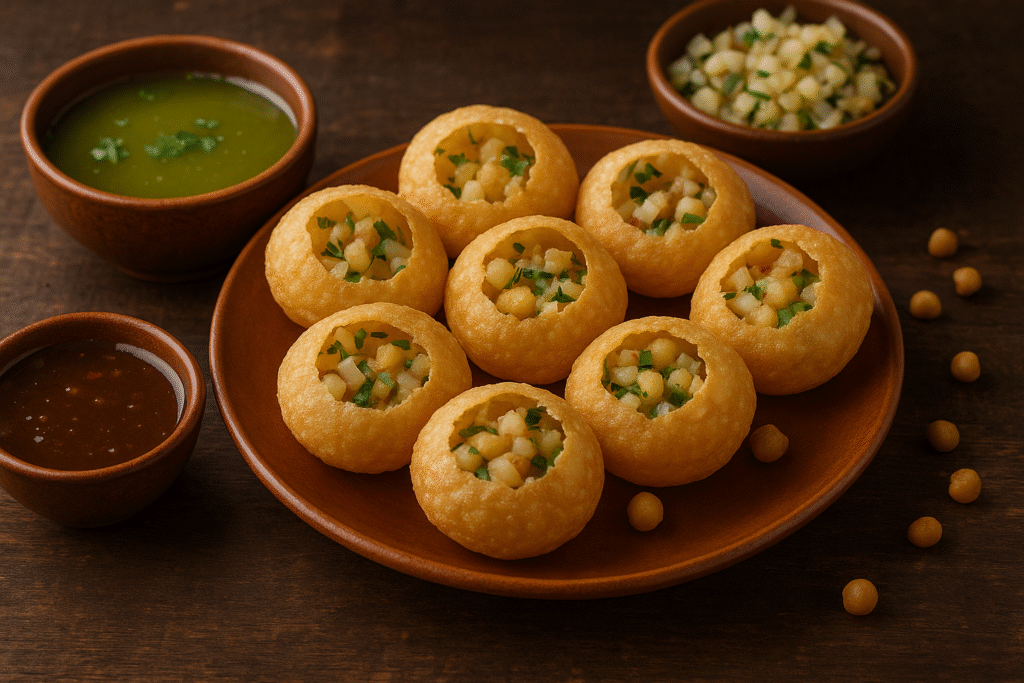
North India (Gol Gappa): In Delhi, Punjab, and Uttar Pradesh, it is called Gol Gappa. The puris are small and round, stuffed with mashed potato, chickpeas, and tangy tamarind water.
West India (Pani Puri): In Maharashtra and Gujarat, the name Pani puri is common. Here, puris are usually filled with boiled white peas, sprouts, or Ragda, along with spicy and tangy water.
East India (Phutika): In Bengal, Bihar, and Odisha, it is known as Phutika or gupchup. The puris are crispier and usually filled with mashed potatoes, spices, and tamarind pulp water.
Central & South India: Pani Puri spread across India, and local variations were created with regional spices, chutneys, and fillings.
Cultural Importance
Pani puri is more than just food—it’s an experience. Standing at a roadside stall, eating one puri after another, and competing with friends or family on “who can eat the most” is a shared memory for millions of Indians. It has also become a symbol of India’s vibrant street food culture.
Modern Times
Today, Pani Puri is not just restricted to street vendors. It has entered restaurants, fusion cuisine, and even fine dining, with chefs experimenting using flavoured waters like mint, jaljeera, mango, kokum, and even vodka in some modern versions. It has also gained popularity outside India, in countries like Nepal, Bangladesh, Pakistan, and among Indian communities abroad.
1. Introduction to Pani Puri – The King of Indian Street Food
Pani Puri is not just food, it’s an emotion. The crispy puri, filled with spicy water, tangy chutneys, and a mix of potato or chickpeas, is something every Indian has grown up eating. No matter which part of the country you are in, you will find people crowding around a roadside stall, waiting eagerly for their turn to enjoy this burst of Flavors.
2. History of Pani puri
The story of Pani puri goes back to ancient India. Many believe it started in the Magadha region (present-day Bihar) around 1000 BCE. A popular tale from the Mahabharata also connects Draupadi to the invention of this dish when she had to feed the Pandavas with limited ingredients. Over time, this humble food spread across the country, and each region gave it a new name and a unique twist.
3. Regional Names and Variations
One of the most beautiful things about Pani puri is how it changes with every state:
Gol Gappa – Delhi, Punjab, UP
Phutika – Bengal, Bihar, Odisha
Gupchup – Chhattisgarh, Jharkhand, parts of Odisha
Pani Puri – Maharashtra, Gujarat
Each version has its own filling and spiced water recipe, making panipuri truly diverse.
4. Why Do We Love Pani puri So Much?
Burst of Flavors: Sweet, spicy, tangy, and crunchy – all in one bite.
Fun Experience: Eating panipuri is a social event. People often compete on who eats the most.
Comfort Food: For many, it’s tied to childhood memories and family outings.
5. Modern Twist to Pani puri
Restaurants and chefs have started giving Pani puri a makeover. Now you can find chocolate Pani puri, vodka Pani puri, avocado fillings, and even dry fruit versions in upscale places. While the street style is unbeatable, these experiments show how versatile this snack really is.
6. Cultural Importance
Pani puri is more than just a street snack – it’s part of India’s culture. Festivals, fairs, college hangouts, and evening walks often end with a plate of Pani puri. For Indians abroad, eating Pani puri brings back nostalgia and a taste of home.
7. Conclusion – A Bite of Happiness
Pani Puri is not just about taste, it’s about the experience. The sound of the crispy puri breaking, the burst of spicy water, the laughter with friends while eating – it’s all part of the magic. Whether you call it Gol Gappa, Phutika, or Pani puri, one thing is sure – it will always remain India’s most loved street food.