
India is a land of diverse cultures, languages, and cuisines. Every region of the country has its own signature dish, which speaks volumes about its people and traditions. Among the most loved foods of North India is the famous Chole Bhature. This dish is not just food; it is an experience of taste, aroma, and emotion. It is often said that if you want to taste the true flavors of North India, you must try a plate of hot, fluffy bhature served with spicy and tangy chole. Let’s take a deep dive into the story, history, preparation, and cultural importance of Chole Bhature.
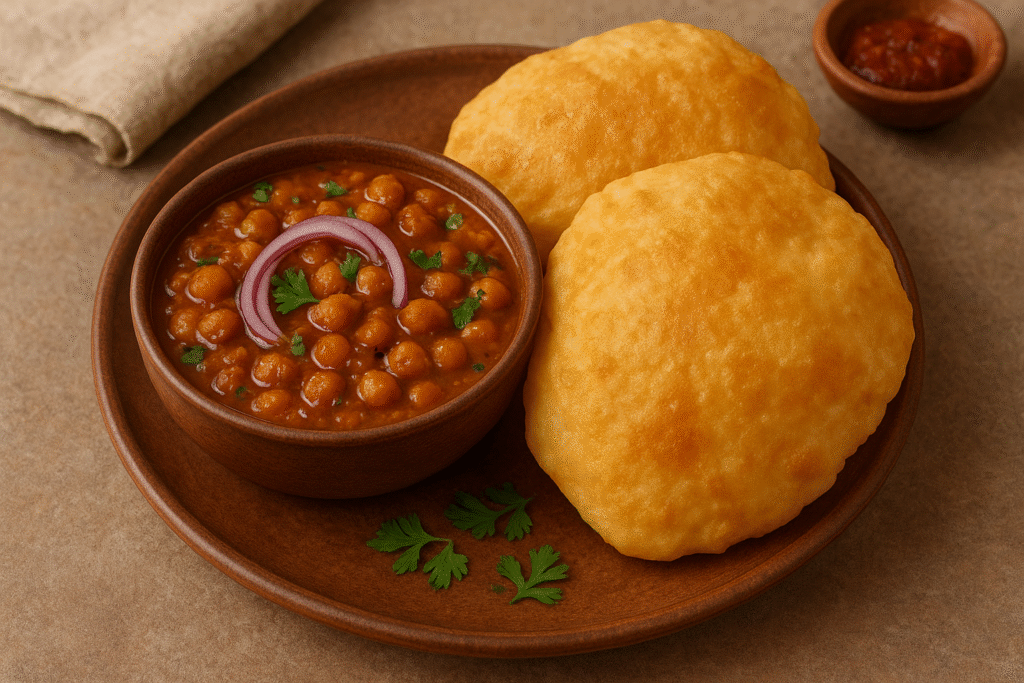
The Dish at a Glance
Chole Bhature is a combination of two main elements:
Chole: A spicy, tangy, and flavorful chickpea curry cooked with onions, tomatoes, ginger, garlic, and a variety of Indian spices.
Bhature: A deep-fried, fluffy bread made from refined flour (maida), sometimes mixed with yogurt and a bit of semolina for texture.
Together, they create a balanced meal that is rich, hearty, and extremely satisfying. The spicy chole is perfectly complemented by the soft yet crispy bhature, making it one of the most popular breakfast and lunch dishes in North India.
A Glimpse into History
The exact origins of Chole Bhature are debated, but most food historians believe it became popular in the northern belt of India, especially in Punjab and Delhi. While chickpeas have been part of Indian cuisine for centuries, the concept of pairing them with a fried bread like bhature gained traction during the Mughal era, when Persian influences entered Indian kitchens.
Chole: Chickpeas were widely used in Middle Eastern and Mediterranean cuisine. Their popularity spread in India due to their nutritional value and versatility.
Bhature: The idea of frying bread in oil or ghee has existed in Indian kitchens for ages. But using refined flour (maida), which was more common in Mughal and later colonial times, gave rise to the bhatura.
Delhi is often credited as the modern capital of Chole Bhature. In the bustling streets of Chandni Chowk, Karol Bagh, and Connaught Place, you will find vendors and restaurants that have been serving this delicacy for decades. For many, eating Chole Bhature is a ritual—something to enjoy with family and friends on a lazy Sunday morning.
The Making of Chole
The magic of Chole lies in its spices. While chickpeas themselves are mild in flavor, the way they are cooked transforms them into something extraordinary.
Soaking and Boiling: White chickpeas (kabuli chana) are soaked overnight and boiled until soft. Some recipes add tea leaves while boiling to give the chole a darker, richer color.
The Masala Base: A mix of onions, tomatoes, ginger, garlic, and green chilies is sautéed in oil or ghee. Spices like cumin, coriander, turmeric, garam masala, and amchur (dry mango powder) are added for depth.
Slow Cooking: The boiled chickpeas are added to this masala and simmered until they absorb all the flavors. A touch of kasuri methi (dried fenugreek leaves) at the end adds a unique aroma.
The result is a thick, tangy, spicy curry that pairs beautifully with the plain but indulgent bhature.
The Art of Making Bhature
Bhature is not just fried bread; it is an art. When made perfectly, it should be fluffy, light, and slightly crisp on the outside.
Dough Preparation: Maida (refined flour) is kneaded with yogurt, salt, sugar, oil, and sometimes a bit of semolina. The dough is rested for a few hours to ferment slightly.
Shaping and Frying: Small portions of dough are rolled into round discs and deep-fried in hot oil. The bhature puff up into golden, airy breads.
Texture: The inside remains soft, while the outside has a light crispness. Bhature are usually larger than puris, making them perfect for scooping up chole.
Accompaniments That Complete the Plate
A typical serving of Chole Bhature is never complete without accompaniments. Some common sides include:
Pickled Onions: Thinly sliced onions soaked in vinegar or lemon juice, adding tanginess.
Green Chutney: Made from coriander and mint, it balances the spice of the chole.
Pickles (Achar): Adds a sharp punch to the meal.
Salad: Fresh cucumber, tomato, and carrot slices for freshness.
Glass of Lassi: In Punjab, Chole Bhature is often enjoyed with a tall glass of sweet or salted lassi, making the meal even more indulgent.
Why Chole Bhature is So Loved
Taste Explosion: The combination of spicy, tangy, and savory chole with the mild, airy bhature makes every bite delightful.
Comfort Food: For many North Indians, Chole Bhature is a comfort dish. Families often gather on weekends to enjoy it together.
Street Food Star: From small roadside dhabas to five-star hotels, Chole Bhature is found everywhere. Its universal appeal lies in its affordability and flavor.
Nutritional Balance: While it is indulgent, the dish provides protein from chickpeas, energy from flour, and a variety of nutrients from spices and accompaniments.
Regional Variations
Delhi Style: Rich, spicy, and often served with pickles and green chutney.
Punjabi Style: Extra buttery and hearty, often paired with lassi or buttermilk.
Amritsari Chole: Known for its unique blend of spices and slightly smoky flavor.
Restaurant Style: Sometimes lighter on spice, with bhature made fluffier using baking soda.
Each region adds its own twist, but the essence remains the same—flavorful chole with perfectly fried bhature.
The Cultural Importance
Chole Bhature has grown beyond being just food. It is part of India’s cultural fabric.
Festivals and Celebrations: Many families cook Chole Bhature during festivals like Holi, Diwali, and family gatherings.
Morning Ritual: In Delhi and Punjab, it is common to head out for breakfast at a local dhaba and start the day with this dish.
Bonding Food: Sharing a plate of Chole Bhature with friends after college, or standing in line at a busy stall with office colleagues, creates memories.
It has also gained international popularity. Indian restaurants around the world serve Chole Bhature as a highlight of their menu, introducing global food lovers to its magic.
The Indulgence Factor
It must be admitted that Chole Bhature is not exactly “light food.” Being fried and rich in spices, it is indulgent. But that is precisely what makes it so special. It is not something you eat every day, but when you do, it feels like a treat. It reminds us that food is not just about calories or nutrients—it is also about joy, tradition, and community.
Personal Connection
For many people, Chole Bhature brings back childhood memories. Waking up on a Sunday morning to the smell of spices being roasted in the kitchen, waiting eagerly for hot bhature to come out of the kadai, and then eating them with tangy chole—it is a memory etched in countless Indian households.
Even today, no matter how many modern foods come and go, Chole Bhature remains timeless. It is proof that some dishes can never lose their charm.
Conclusion
Chole Bhature is more than just a dish—it is an emotion. It captures the heart of Indian cuisine: bold flavors, comforting textures, and the joy of sharing food with loved ones. From the bustling streets of Delhi to fine dining restaurants abroad, it continues to win hearts everywhere.
The balance of spicy chickpeas and soft, fluffy bhature represents harmony in diversity, much like India itself. Whether eaten at a street-side stall or at home on a festival morning, Chole Bhature is sure to bring a smile to your face and warmth to your heart.
So, the next time you crave something indulgent, comforting, and truly Indian, you know what to order—a plate of Chole Bhature.