
India is a land of diverse food cultures where every region has something unique to offer. Among the many traditional dishes that hold a special place in Indian cuisine, Dal Baati from Rajasthan stands out as one of the most iconic and beloved. This dish is not just food; it is an experience that reflects the lifestyle, climate, and heritage of the desert state. The golden, round baatis served with aromatic dal, along with a generous drizzle of ghee, make for a wholesome, filling, and unforgettable meal. To truly understand the beauty of this dish, one needs to explore its history, preparation, cultural value, and the emotions it carries for the people of Rajasthan and beyond.
The Historical Roots of Dal Baati
Dal Baati has deep historical roots. It is believed to have originated centuries ago when Rajput warriors used to carry wheat dough with them while going to war. In the harsh desert regions, resources like vegetables were scarce, and cooking methods had to be simple. The soldiers would bury balls of dough under the hot sand, allowing the sun and heat to slowly bake them. Later, these baked dough balls were eaten with ghee, making them highly filling and energy-giving.
Over time, the dish evolved, and people started pairing these baatis with different types of dal. Thus, Dal Baati became a balanced meal – protein-rich lentils combined with energy-rich wheat. What started as a survival food gradually turned into a cultural symbol of Rajasthan and is now celebrated across India.
The Main Components of Dal Baati
Dal Baati is not a single dish but a combination of different elements that come together beautifully. Let’s look at each part:
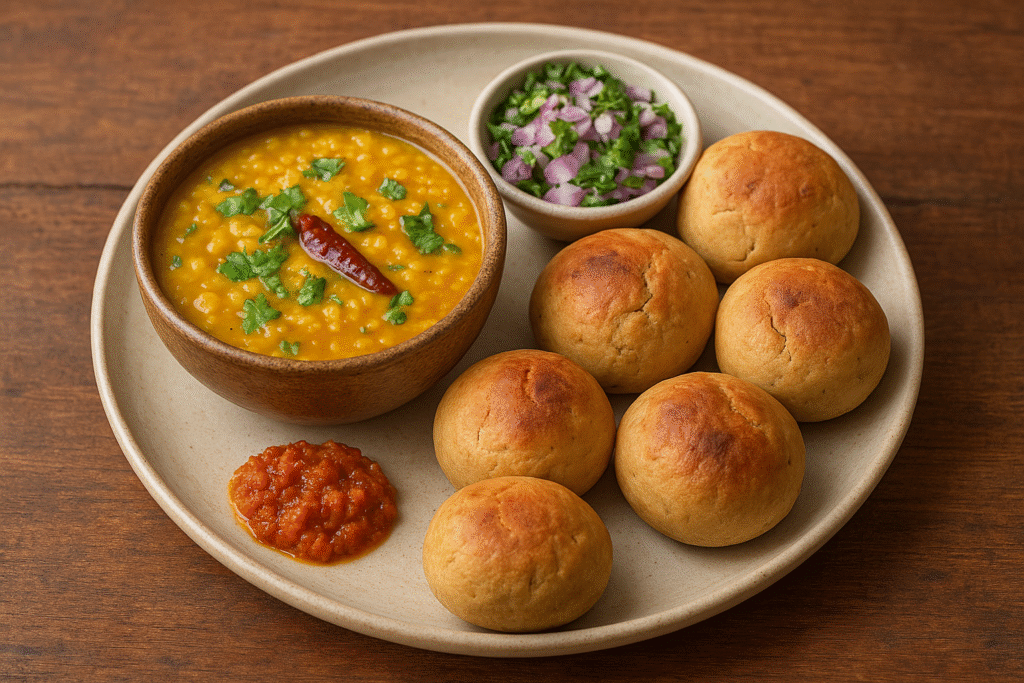
Baati – The baati is the heart of this dish. It is made with wheat flour, a little semolina for crunch, salt, and ghee. The dough is shaped into round balls and traditionally baked in a clay oven or tandoor. In modern times, people also bake baatis in ovens or cook them over charcoal. The outside of the baati is crisp and golden brown, while the inside remains soft. Before serving, baatis are usually dipped in ghee, which enhances their flavor.
Dal – The dal served with baati is usually a mix of lentils like toor dal, chana dal, moong dal, and urad dal. Each lentil adds its own texture and taste, making the dal rich and hearty. The dal is tempered with onions, tomatoes, garlic, and spices like cumin, red chili, coriander, and turmeric. The tempering, or tadka, gives the dal its signature aroma and makes it perfect to pair with baatis.
Churma – Though not always mentioned together, Dal Baati is incomplete without churma. Churma is made by crushing baatis or wheat flour dough and mixing it with jaggery or sugar, along with ghee. This sweet dish balances the spicy dal and the plain baati, creating a complete meal that satisfies every taste – savory, spicy, and sweet.
Ghee – Perhaps the most important ingredient in this trio is ghee. Whether it is drizzled over baatis, poured into dal, or mixed with churma, ghee adds richness, flavor, and energy. In Rajasthan, where the climate is dry and food needs to be calorie-dense, ghee is considered a symbol of prosperity and hospitality.
The Cooking Process
Preparing Dal Baati is a labor of love. Traditionally, families gather together to make this dish during festivals or special occasions. The baatis require careful kneading of dough, shaping, and slow cooking. The dal, on the other hand, is prepared with patience as each spice is roasted to bring out its full flavor. Finally, the churma is made with crushed baatis or roasted flour, giving it a coarse yet delightful texture.
The whole process might seem time-consuming, but the outcome is worth every effort. The smoky aroma of baatis cooked in traditional ovens, the bubbling dal full of spices, and the sweet churma together create a meal that appeals to all the senses.
Cultural Importance of Dal Baati
Dal Baati is not just food; it is a cultural symbol of Rajasthan’s hospitality and tradition. In Rajasthani households, it is often prepared on festivals like Diwali, Holi, and Makar Sankranti. It is also a popular dish during weddings and celebrations, where huge quantities are prepared to feed guests.
In Rajasthani culture, serving food is considered a way of showing respect and love. When a guest visits, a plate of Dal Baati with generous amounts of ghee is a sign of warmth and welcome. Eating this dish with family, sitting together, and sharing baatis dipped in dal brings people closer.
Nutritional Value
Dal Baati is a wholesome dish that provides both energy and nutrition. The baatis, made of wheat, give carbohydrates and fiber, while the dal provides protein, vitamins, and minerals. Ghee adds healthy fats that are important in dry desert climates. Together, this combination makes Dal Baati not just tasty but also healthy and fulfilling.
Modern Variations
Though the traditional method is still cherished, Dal Baati has evolved with time. In restaurants, you may find different variations like stuffed baatis (with spiced peas, potatoes, or paneer inside). Some chefs experiment with baking baatis in modern ovens or even air-fryers for a healthier version. The dal, too, may be prepared with less oil or with different spices depending on taste.
Despite these variations, the soul of Dal Baati remains the same – rustic, hearty, and comforting.
The Dal Baati Experience
Eating Dal Baati is an experience in itself. Imagine sitting in a traditional Rajasthani courtyard, with folk music playing in the background, and a plate of golden baatis served alongside a steaming bowl of dal. The server pours hot ghee over your baati, cracks it open, and lets you enjoy it with dal. Then, after the savory meal, you end with sweet churma that melts in your mouth. This is more than food – it is culture served on a plate.
Global Popularity
Today, Dal Baati is not restricted to Rajasthan. It is enjoyed across India and even abroad. Many Indian restaurants around the world serve Dal Baati as part of their menu. Rajasthani food festivals and cultural programs often showcase this dish, giving people a chance to experience authentic desert cuisine.
For people from Rajasthan living outside India, Dal Baati is a way to stay connected to their roots. Cooking it abroad reminds them of their homeland, family gatherings, and festive celebrations.
Conclusion
Dal Baati is much more than just a meal; it is a story of history, culture, and tradition. From the desert warriors who first baked baatis in sand to the modern families enjoying it in air-conditioned restaurants, this dish has traveled through time and space without losing its essence. It represents the warmth of Rajasthani hospitality, the richness of Indian spices, and the joy of sharing food with loved ones.
Every bite of Dal Baati tells a story – of resilience, simplicity, and celebration. Whether you are a food lover, a traveler, or simply someone who enjoys good home-cooked meals, Dal Baati is an experience you must try. Once you taste the golden baati dipped in spicy dal and sweet churma, with ghee flowing over it, you will understand why this dish has been cherished for centuries.