India is a land of countless cuisines, and each state has its own unique way of preparing food that connects people to their culture, tradition, and daily life. Among the many varieties of dishes, Dal Dholi is a wholesome and comforting recipe from Gujarat. While it may sound simple, it carries deep flavors, nutrition, and cultural value. Dal Dholi is not just food; it is an emotion for many Gujarati households, often cooked on regular days as well as on special occasions.
What is Dal Dholi?
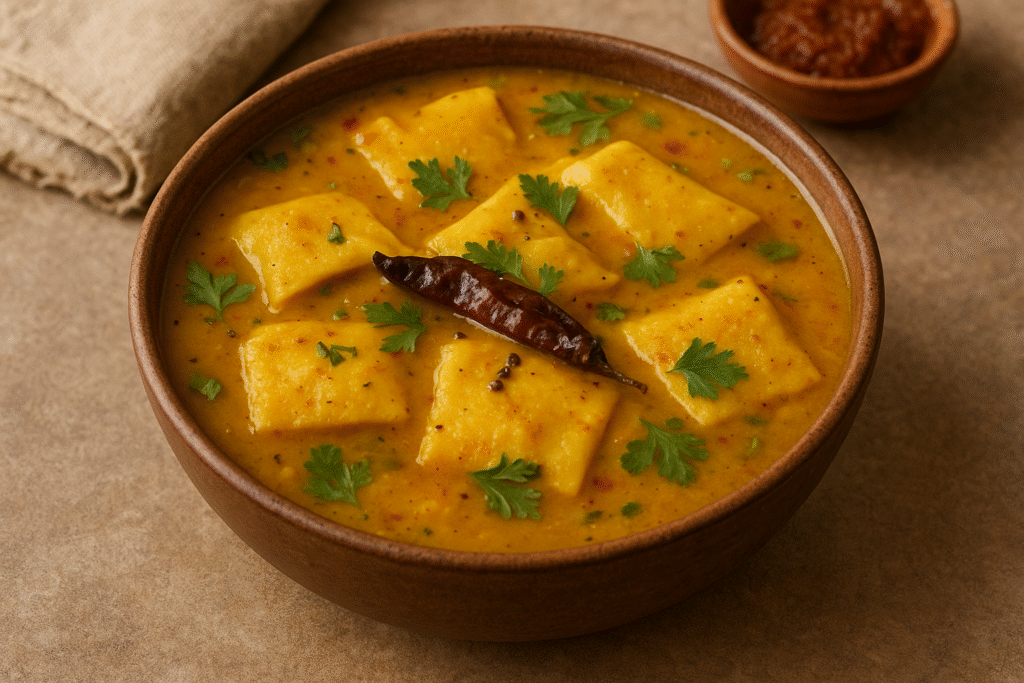
Dal Dholi is a traditional Gujarati preparation made using split moong dal (yellow lentils) or sometimes tur dal (pigeon peas). The word “Dal” refers to the lentils, and “Dholi” means washed or cleaned. So, the name itself indicates that it is a clean, simple, and pure dish. It is a mild, light, and easily digestible recipe that balances both taste and health.
The dish has a smooth, creamy texture, with subtle spices, making it suitable for people of all age groups – from kids to the elderly. It is usually enjoyed with steamed rice, khichdi, or soft phulkas, and sometimes even with thepla or bhakri.
Historical and Cultural Importance
Dal Dholi has been an inseparable part of Gujarati kitchens for generations. In earlier times, when heavy, oily foods were less common in daily diets, people preferred cooking lentils in the simplest way possible. Dal Dholi became popular because it was easy to cook, required very few ingredients, and offered complete nutrition.
In villages, elders often recommended Dal Dholi to those recovering from illness, as it was light on the stomach yet full of proteins. In fact, it is still one of the first solid foods given to toddlers when they start eating family meals, as it provides both strength and digestion support.
Gujarati families often prepare Dal Dholi on fasting days or after festivals when the body needs something soothing after heavy food. It reflects the simplicity of Gujarati cuisine where the focus is on balance and health without compromising on taste.
Ingredients of Dal Dholi
The beauty of Dal Dholi lies in its simplicity. You don’t need exotic spices or a long list of ingredients. A few basics from your kitchen pantry are enough.
Moong dal (yellow split lentils) – the key ingredient
Turmeric powder – for flavor, color, and health benefits
Salt – to taste
Ghee or oil – used for tempering
Cumin seeds – add earthy aroma
Green chili and ginger – for mild spiciness (optional)
Asafoetida (hing) – supports digestion
Curry leaves – enhance flavor
Coriander leaves – for garnish
Some families also add a touch of lemon juice for tanginess or jaggery for mild sweetness, as Gujarati cuisine often balances sweet and sour flavors.
Method of Preparation
Making Dal Dholi is very simple, which is why it is a favorite everyday dish in many households.
Washing and soaking the dal:
The moong dal is first washed thoroughly until the water runs clear. Some people soak it for 20–30 minutes to reduce cooking time.
Cooking the dal:
The soaked dal is boiled with turmeric and enough water until it turns soft and mushy. Traditionally, it was cooked in clay pots on slow fire, which gave a unique earthy taste. Nowadays, most people use a pressure cooker or instant pot.
Mashing the dal:
Once cooked, the dal is whisked or mashed to get a smooth, creamy consistency.
Tempering (tadka):
In a small pan, ghee or oil is heated. Cumin seeds, green chili, ginger, curry leaves, and hing are added. This tempering is poured over the cooked dal, infusing it with aroma and flavor.
Final touch:
The dal is simmered for a few minutes, garnished with coriander leaves, and served hot.
This simple process makes Dal Dholi one of the easiest yet most fulfilling recipes of Gujarati cuisine.
Taste and Texture
Dal Dholi is not heavily spiced. It has a mild, soothing, and slightly nutty flavor that comes from moong dal. The tempering adds a layer of aroma and taste – cumin gives an earthy touch, hing aids digestion, and curry leaves provide freshness.
The texture is smooth, creamy, and comforting, almost like a warm hug in a bowl. Unlike other spicy dals, Dal Dholi is light and subtle, making it a perfect dish for lunch or dinner.
Nutritional Value of Dal Dholi
Dal Dholi is not only delicious but also a powerhouse of nutrition:
Rich in protein: Moong dal is a great plant-based protein source, helping in muscle building and repair.
Easy to digest: Unlike heavier dals, moong dal is light on the stomach, making it suitable for all ages.
High in fiber: Supports digestion and keeps you full longer.
Packed with vitamins and minerals: Contains iron, potassium, magnesium, and B vitamins.
Low in fat: Especially when cooked with minimal ghee, making it good for weight management.
Because of these benefits, Dal Dholi is often included in diets for people recovering from illness, children, and elderly family members.
Variations of Dal Dholi
Though the base remains the same, there are slight variations in how different families cook it:
With garlic tadka: Some households prefer adding garlic to the tempering for stronger flavor.
With vegetables: Chopped spinach, bottle gourd, or drumstick can be added to make it more wholesome.
Sweet-sour touch: A small piece of jaggery or a dash of lemon juice balances flavors beautifully.
Consistency: Some prefer it thick to eat with rotis, while others make it thin and soupy to enjoy with rice.
This flexibility is another reason why Dal Dholi has remained a favorite for generations.
When is Dal Dholi eaten?
Daily meals: It is often cooked for lunch or dinner along with rice and sabzi.
During illness recovery: Doctors and elders recommend it for its lightness and nutrition.
Festivals and fasting days: It is cooked as a simple yet satisfying dish after festive feasts.
For kids and elderly: Its soft texture makes it perfect for people with sensitive digestion.
Dal Dholi in Modern Kitchens
Even in today’s fast-paced lifestyle, Dal Dholi remains relevant. With busy schedules, people look for quick yet healthy recipes, and this dish fits perfectly. It takes less than 30 minutes to prepare, needs minimal ingredients, and satisfies hunger with nourishment.
Food bloggers and chefs have also started showcasing Dal Dholi in creative ways – pairing it with brown rice, quinoa, or even serving it as a soup starter in fusion restaurants. This shows how a humble traditional dish can find a place in modern dining.
Personal Connection
For many Gujaratis, Dal Dholi brings back childhood memories. The aroma of freshly tempered dal wafting through the house reminds them of home-cooked meals, grandparents insisting on finishing the last bite, or mothers lovingly serving it with rice and ghee.
Personally, Dal Dholi feels like comfort in a bowl. It is that one dish you crave when you are tired, unwell, or simply missing home. Its simplicity carries warmth, and its taste speaks of love and care.
Conclusion
Dal Dholi may look like a simple lentil dish, but it holds a special place in Gujarati cuisine and Indian food culture. It represents simplicity, nourishment, and tradition. It is proof that food doesn’t have to be complicated or rich in spices to be delicious. Sometimes, the most basic recipes carry the deepest satisfaction.
Whether served with rice, roti, or khichdi, Dal Dholi is more than just food – it is comfort, care, and culture served in a bowl. Its lightness, nutrition, and ease of preparation make it timeless. And no matter how many modern dishes come and go, Dal Dholi will always remain a heartwarming part of Gujarati households.
✨ Word Count: ~1,210
Do you want me to also write this in blog-style with headings, subheadings, and SEO keywords so it’s ready to publish on a food blog?