
Momos are a type of steamed dumpling that originated in Tibet and later became popular in Nepal, Bhutan, and parts of India, especially in the Himalayan regions. They are small bite-sized dumplings made with a thin flour dough and filled with a variety of stuffings like vegetables, paneer, chicken, or mutton.
The outer layer of momos is soft and delicate, while the inside is juicy and flavorful. Traditionally, they are steamed, but nowadays you can also find fried, tandoori, and pan-fried versions. Momos are usually served hot with a spicy red chutney made of tomatoes, chilies, garlic, and other spices, sometimes paired with mayonnaise or soup.
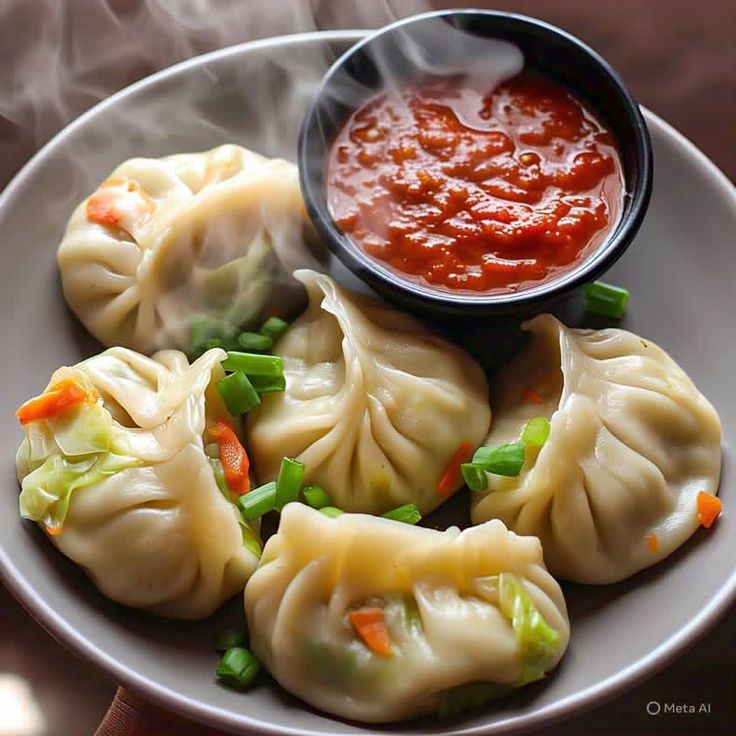
Loved for their light texture and delicious taste, momos have become one of the most popular street foods in India and neighboring countries. They are affordable, quick to prepare, and enjoyed by people of all ages.
Momos – The Beloved Dumpling of the Himalayas
When we talk about street food in India and neighboring countries, one of the first names that comes to mind is momos. These soft, warm dumplings have managed to win the hearts of millions in just a few decades. Whether you are a college student looking for a quick bite, a traveler enjoying the cold weather in the hills, or simply someone craving something light and tasty, momos have become the go-to food. But what are momos, where did they come from, and why are they so popular? Let’s explore the world of momos in detail.
The Origin of Momos
The story of momos begins in Tibet, where they were traditionally prepared as a simple dish made with flour dough and stuffed with yak meat. From Tibet, momos traveled to Nepal, Bhutan, and eventually to India, especially in regions like Sikkim, Darjeeling, and the North-East. Over time, the dish was adapted to suit local tastes and vegetarian preferences.
In Nepal, momos are a staple food and are often served with a hot, tangy tomato-based chutney called achar. In India, momos gained popularity in the 1990s and 2000s, first in the hilly regions and later across major cities like Delhi, Mumbai, and Bangalore. Today, momos are no longer just Himalayan food—they have become a national favorite.
What Exactly Are Momos?
Momos are dumplings made with a thin, all-purpose flour dough and a filling of your choice. The dough is rolled into small circles, filled with vegetables, paneer, chicken, or other meats, and then sealed in different shapes like half-moons, pleats, or round parcels. The most common way of cooking momos is steaming, which makes them soft and light, but they can also be fried, pan-seared, or even cooked in tandoors for a smoky flavor.
The beauty of momos lies in their versatility. They can be:
Vegetarian momos – stuffed with cabbage, carrots, onions, capsicum, and sometimes paneer.
Chicken momos – juicy and full of flavor, often the most popular variety in India.
Pork or mutton momos – closer to the Tibetan and Nepalese original recipe.
Paneer momos – soft and creamy, made for paneer lovers.
Cheese momos – a modern fusion twist that many youngsters enjoy.
Types of Momos
Over the years, momos have taken many new forms. Some popular types include:
Steamed Momos – The classic version, soft, light, and healthy.
Fried Momos – Crispy on the outside and juicy inside, a street food favorite.
Tandoori Momos – Cooked in a clay oven, marinated with spicy sauces, giving them a smoky flavor.
Kothey Momos – Half steamed, half fried, combining softness with crunch.
Open Momos – New-age momos served like little open parcels with sauces on top.
Soup Momos – Steamed dumplings served in hot broth, perfect for winters.
Jhol Momos – A Nepalese specialty, momos dipped in a spicy, soupy chutney.
This variety shows just how adaptable momos are—they can be light and healthy, or indulgent and spicy, depending on how you like them.
The Magic of the Chutney
No momo experience is complete without its signature chutney. Usually, momos are paired with a fiery red sauce made of tomatoes, garlic, red chilies, and spices. This chutney gives a perfect kick to the otherwise mild taste of momos. Some places also serve mayonnaise or creamy dips alongside, but the authentic momo chutney is what makes the dish truly unforgettable.
In Nepal and Sikkim, momos are often served with achar or a soupy sauce, which not only enhances flavor but also makes the meal more filling.
Why Are Momos So Popular?
Momos are not just food—they are an emotion for many. There are several reasons behind their immense popularity:
Affordable – Momos are budget-friendly, making them accessible to students, workers, and almost everyone.
Tasty and Light – Unlike heavy curries, momos are easy on the stomach while still being satisfying.
Quick to Eat – Perfect as a snack on the go.
Customizable – Veg, non-veg, spicy, mild—there is a momo for everyone.
Street Food Culture – In cities like Delhi and Kolkata, momo stalls are everywhere, creating a vibrant street food scene.
Cultural Value of Momos
For Himalayan communities, momos are more than just a snack. They are part of family gatherings, festivals, and daily meals. Preparing momos is often a group activity, where family members sit together, prepare the fillings, fold the dumplings, and steam them. It brings people closer and creates a sense of bonding.
In urban India, momos have taken on a new cultural role. They are now a symbol of youth street food culture, especially among college students. Meeting friends for a plate of steaming momos has become a ritual for many.
Momos in Modern Times
With globalization and fusion food trends, momos have also evolved. Today, you can find:
Cheese burst momos filled with melted cheese.
Chocolate momos for dessert lovers.
Butter chicken momos blending North Indian curry with dumplings.
Schezuan momos inspired by Chinese flavors.
Restaurants and cafes experiment with momos constantly, but the love for the traditional steamed momo never fades.
Nutritional Value of Momos
While momos are often considered street food, they are relatively healthy compared to deep-fried snacks. Steamed momos are low in oil and can be packed with vegetables. However, fried versions and mayonnaise dips do add calories.
A plate of veg momos can provide:
Carbohydrates from the dough.
Fiber, vitamins, and minerals from the vegetables.
Protein if filled with paneer, chicken, or meat.
This balance makes them a wholesome snack, though moderation is key if you’re watching your diet.
Personal Touch – Why We Love Momos
For many people, momos are linked with special memories. For students, they might remind them of college canteens. For travelers, they bring back the taste of the hills. For families, they represent warmth and togetherness.
There is something comforting about holding a plate of steaming hot momos on a chilly evening, dipping them in spicy chutney, and enjoying them with friends or family. It is not just about food—it’s about the feelings that come with it.
Conclusion
Momos are much more than dumplings. They are a journey of culture, taste, and emotions. From their humble Tibetan beginnings to becoming India’s favorite street food, momos have traveled far and wide, adapting to different tastes and regions.
Whether you like them steamed and simple, fried and crispy, or loaded with modern flavors, momos always manage to bring a smile. They are proof that sometimes the simplest foods can create the deepest impact.
So next time you bite into a momos, remember—you are enjoying not just a snack but a piece of history, culture, and comfort wrapped in a tiny dumpling.