
When we talk about Indian street food, one name that instantly comes to mind is Pav Bhaji. It is not just a dish; it is an experience, a flavour-packed journey that delights people across all age groups. From the busy streets of Mumbai to small towns and even five-star restaurants, pav bhaji has carved a special place in the hearts of millions. Its simplicity, yet bold taste, makes it one of the most popular and comforting foods of India.
In this article, let us dive deep into the world of pav bhaji – its history, ingredients, preparation, Flavors, cultural importance, variations, and why people love it so much.
The story of pav bhaji goes back to 19th century Mumbai, then called Bombay. During that time, the city was booming with textile mills. The workers used to work long hours and had very little time for proper meals. They needed something quick, filling, and affordable.
Food vendors near the mills came up with a brilliant idea: mash different leftover vegetables, cook them with butter and spices, and serve with pav (soft bread rolls introduced by the Portuguese). This became the quick meal for mill workers, and soon it grew in popularity. From being a workers’ food, it moved onto street stalls, restaurants, and eventually into every Indian household.
Today, pav bhaji is not just limited to Mumbai – it is enjoyed in Delhi, Ahmedabad, Kolkata, Chennai, and even outside India in places with Indian communities.
What is Pav Bhaji?
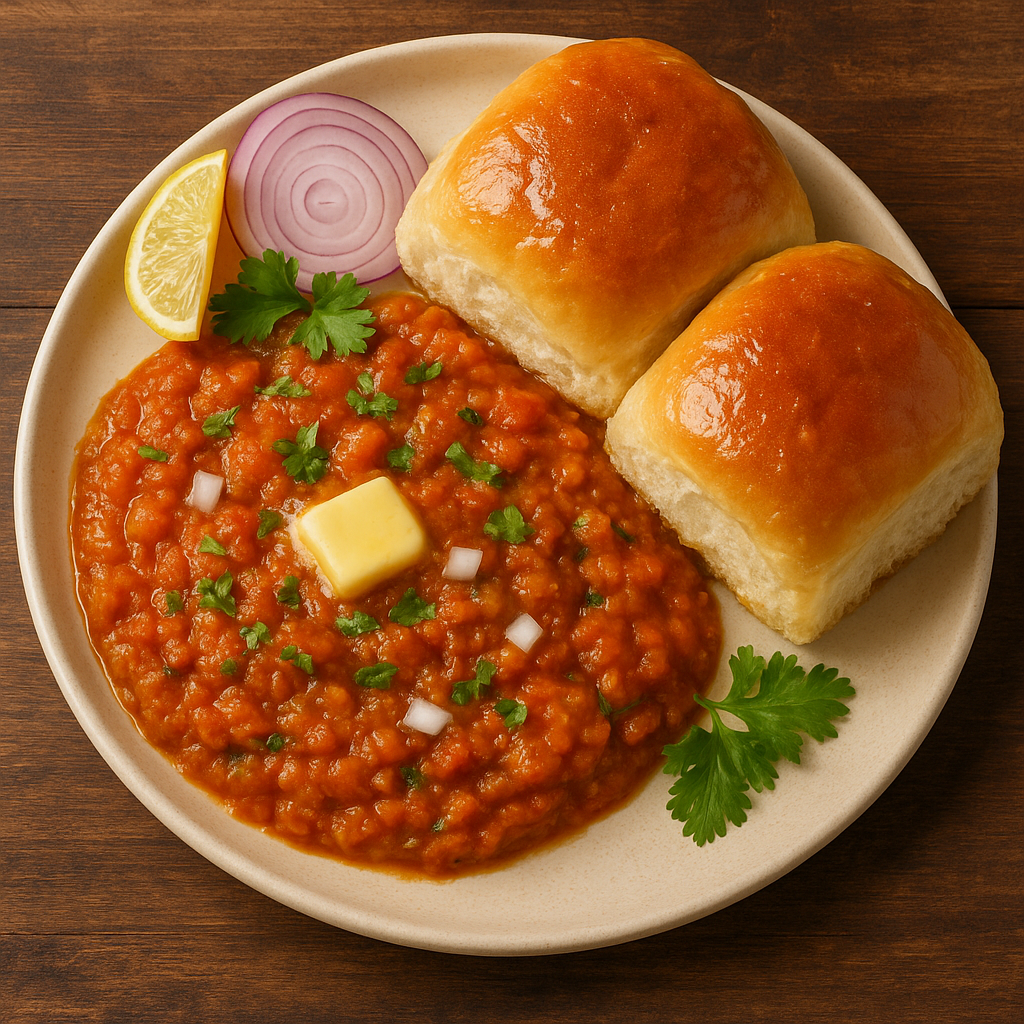
In simple words, pav bhaji is a spicy vegetable mash served with butter-toasted bread rolls. But describing it only this way does not do justice to its charm.
The bhaji (vegetable curry) is made by mashing together boiled potatoes, peas, cauliflower, capsicum, tomatoes, onions, and sometimes even carrots or beans. It is cooked with a special blend of spices called pav bhaji masala, along with generous amounts of butter. The result is a thick, smooth, and flavourful curry.
The pav is a type of bread roll, sliced in half and shallow-fried on a tawa (flat pan) with butter until golden and crispy. When you scoop the spicy bhaji with the soft pav, it creates a perfect balance of Flavors and textures.
Ingredients That Make It Special
Every bite of pav bhaji is bursting with flavor, and that is because of its unique combination of ingredients:
Vegetables: Potatoes, peas, cauliflower, and capsicum form the base. Each vegetable adds its own texture and taste.
Tomatoes and Onions: These give the bhaji its rich flavor and slightly tangy taste.
Pav Bhaji Masala: This is the hero spice blend. It usually contains coriander seeds, cumin, fennel, dry red chilies, cinnamon, cloves, and dry mango powder. It adds warmth and depth to the curry.
Butter: No pav bhaji is complete without butter. In fact, on Mumbai streets, vendors often add an extra cube of butter on top before serving.
Pav (Bread Rolls): Soft, fluffy bread that soaks up the spicy bhaji.
Toppings: Chopped onions, fresh coriander leaves, lemon wedges, and sometimes grated cheese make it even more exciting.
The Cooking Process
Cooking pav bhaji is not very complicated, but it is all about patience and balance of spices. Here’s how it is generally made:
Vegetables are boiled until soft.
Onions, tomatoes, ginger, garlic, and green chilies are sautéed in butter.
Pav bhaji masala is added to bring in that signature taste.
The boiled vegetables are mashed and mixed with the masala base.
The whole mixture is cooked slowly so that all flavors blend perfectly.
Finally, it is served hot with butter-toasted pav, chopped onions, and lemon wedges.
The beauty of this dish is that even though it is made from humble vegetables, the way it is cooked transforms it into something mouthwatering.
The first thing you notice when you eat pav bhaji is its aroma – the smell of butter melting on the tawa, spices roasting, and pav being toasted. Then comes the taste:
Spicy and Tangy: Thanks to tomatoes, chilies, and masala.
Buttery and Rich: Butter balances out the heat and adds smoothness.
Savory and Comforting: Every spoonful feels warm and satisfying.
Eating pav bhaji is not just about taste; it is about textures too – the softness of pav, the creaminess of bhaji, the crunch of raw onions, and the tang of lemon juice.
Over time, people have experimented with pav bhaji and created different versions. Some popular ones are:
Cheese Pav Bhaji: Topped with melted cheese for extra richness.
Jain Pav Bhaji: Made without onion, garlic, and potatoes (usually raw banana is used instead).
Khada Pav Bhaji: Instead of mashing, the vegetables are kept chunky.
Butter Pav Bhaji: Extra butter in both bhaji and pav for indulgence.
Paneer Pav Bhaji: Cubes of paneer (cottage cheese) are added.
Kolhapuri Pav Bhaji: A spicier version made with red chili paste.
Healthy Pav Bhaji: Uses less butter and includes vegetables like broccoli or spinach.
These variations show how flexible the dish is. No matter how you make it, the soul of pav bhaji remains the same.
Pav bhaji is not just food; it is part of India’s street food culture. In Mumbai, it is available at every corner – from Juhu Beach stalls to famous places like Sardar Pav Bhaji and Canon Pav Bhaji. Families, college students, tourists, and office-goers all gather around these stalls late into the night.
It is also a popular choice for parties, weddings, and festivals. Many people prefer to serve pav bhaji at gatherings because it is easy to make in large quantities and loved by almost everyone.
Beyond India, pav bhaji has reached countries like the USA, UK, Canada, and the Middle East, where Indian restaurants proudly serve it to food lovers.
Why Do People Love Pav Bhaji?
There are many reasons why pav bhaji is universally loved:
Affordable: Street stalls sell it at reasonable prices, making it accessible to everyone.
Quick Meal: Easy to prepare and serve, perfect for busy lifestyles.
Comfort Food: It gives a feeling of warmth and satisfaction.
Family-Friendly: Kids, adults, and elders all enjoy it.
Customizable: Can be made spicy, mild, buttery, or cheesy depending on taste.
It is one of those rare dishes that can be both a casual street snack and a main course for dinner.
For many people, pav bhaji is more than just food – it is a memory. For me too, it reminds me of family outings and late-night street food trips with friends. The sight of a huge tawa with bhaji bubbling in butter, the sizzling pav, and the vendor skillfully mixing vegetables is unforgettable.
Whenever I eat pav bhaji, I feel a sense of nostalgia. It is not just about taste; it is about togetherness, laughter, and joy.
Conclusion
Pav bhaji is proof that even the simplest ingredients can create magic when combined with creativity and love. What started as a humble meal for mill workers has now become a global sensation. With its spicy, buttery flavors and comforting nature, pav bhaji truly represents the heart of Indian street food.
Whether you eat it at a roadside stall in Mumbai, make it at home for dinner, or enjoy it at a fancy restaurant, pav bhaji never fails to bring a smile. It is more than just a dish – it is a tradition, a celebration, and an emotion.